



The thing most people don’t know about jollof rice is that the smoky smell coming from the bottom of the pot near the end of cooking is not a problem. It’s the point.
That faint char on the bottom layer — called socorrat in some traditions, simply “the bottom pot” in many Nigerian households — is what separates properly made jollof rice from everything else. It’s a signature, not a mistake. And chasing it is one of the more satisfying things you can do at a stove.
Jollof rice is West Africa’s most contested and beloved one-pot rice dish. Every country has its version — Nigerian, Ghanaian, Senegalese, Sierra Leonean — and every family within those countries has its own. This version is Nigerian-style: long grain parboiled rice cooked down in a deeply fried tomato-pepper base, heavily seasoned, steamed tight under foil and a lid until every grain is stained a deep orange-red and the bottom has that signature smoke.
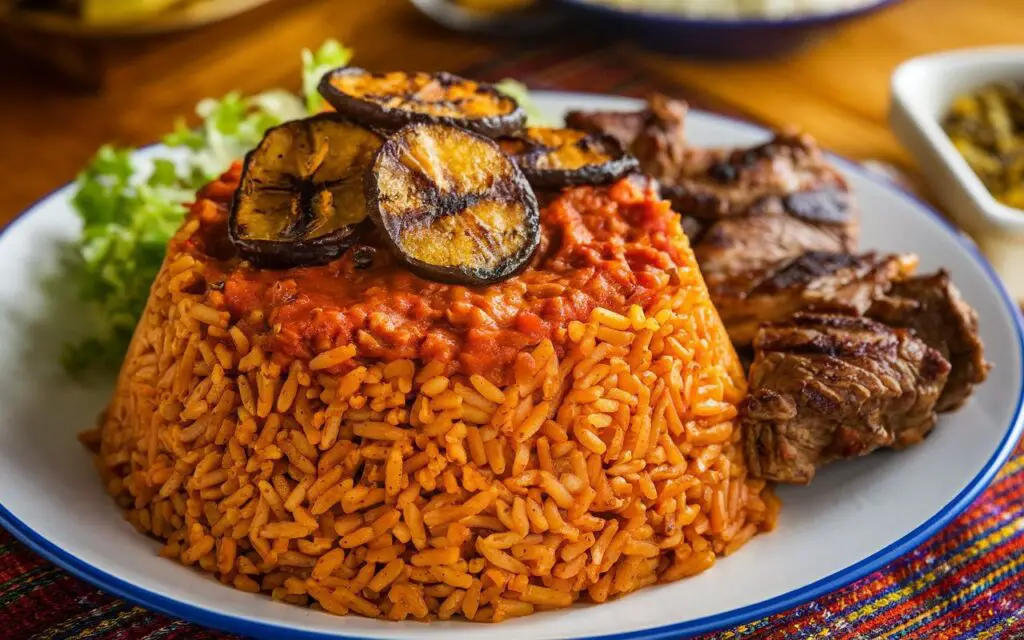
Served here the way it looks in the photo — mounded, topped with caramelized fried plantains, and sitting alongside grilled meat. This is party food. This is Sunday food. This is the rice people ask for by name.
Prep: 20 minutes | Cook: 60 minutes | Serves: 6
The Two Things That Make or Break Jollof Rice
1. Fry the Tomato Base Until the Oil Floats
This is the most important step and the most skipped one. The blended tomato and pepper mixture goes into the pot and needs to cook — uncovered, stirring occasionally — for 20 to 25 full minutes before the rice touches it. You’re not just warming it through. You’re frying it.
At the start it looks like red soup. By the end it should look thick, paste-like, almost jammy, with oil visibly floating on the surface. The color deepens from bright red to a darker, more complex orange-red. The raw tomato smell gives way to something richer and slightly sweet.
That transformation is everything. Rice added to an under-fried, watery base steams unevenly, tastes flat, and goes mushy. Rice added to a fully fried-down base absorbs the flavor completely and cooks through with the right texture. The 20 minutes is not negotiable.
2. Seal the Pot and Leave It Alone
Once the rice goes in and you’ve added the stock, the pot gets sealed with aluminum foil first, then the lid. The foil creates a near-perfect seal that traps steam inside and forces the rice to cook in its own moisture evenly from top to bottom.
Do not lift the lid for the first 20 minutes. Every time you do, steam escapes, temperature drops, and the cook becomes uneven. Set a timer. Walk away. Check at 25 minutes. If the rice is cooked and the liquid is absorbed, you’re done. If there’s still moisture, replace the foil and lid and give it another 5 minutes.
Everything You Need
Tomato-Pepper Base:
| Ingredient | Amount | Notes |
| Roma tomatoes | 4 medium, roughly chopped | Roma or plum tomatoes — less watery than round tomatoes |
| Red bell peppers | 2 medium, roughly chopped | Adds sweetness and body to the base |
| Scotch bonnet or habanero pepper | 1-2 (to taste) | 1 for mild heat, 2 for proper heat — seed them to reduce intensity |
| White onion | 1 medium — half blended, half sliced | Half goes into the blender; half sautées in the pot first |
Rice and Seasoning:
| Ingredient | Amount | Notes |
| Long grain parboiled rice | 3 cups | Uncle Ben’s style — not jasmine, not basmati |
| Neutral oil | ⅓ cup | Vegetable or sunflower — enough to properly fry the base |
| Tomato paste | 2 tablespoons | Deepens the color and adds concentrated tomato flavor |
| Chicken or beef stock | 2 cups | Low-sodium — the seasoning cubes add plenty of salt |
| Curry powder | 1 teaspoon | Classic jollof seasoning — don’t skip it |
| Dried thyme | 1 teaspoon | |
| Bay leaf | 1 | Remove before serving |
| Garlic powder | 1 teaspoon | |
| Smoked paprika | 1 teaspoon | Adds color depth and a subtle smokiness |
| Salt | 2 teaspoons, or to taste | |
| Black pepper | 1 teaspoon | |
| Knorr or Maggi seasoning cubes | 2 (optional) | Traditional and widely used — crumble directly into the pot |
Fried Plantains:
| Ingredient | Amount | Notes |
| Ripe plantains | 2, sliced into rounds | Must be ripe — yellow with black spots. Green = starchy, won’t caramelize |
| Oil for frying | ½ cup | |
| Salt | 1 pinch | Season after frying |

On rice variety: parboiled long grain rice is the standard for Nigerian jollof. It’s partially pre-cooked, which means it holds its shape through the long steam cook without going mushy. Jasmine rice and basmati both absorb liquid too quickly and break down. Look for Uncle Ben’s original or any long grain parboiled variety at your grocery store.
On scotch bonnet: this is the traditional pepper and it has a specific fruity-hot flavor that habanero approximates well. One whole scotch bonnet gives genuine heat. If you’re cooking for people who don’t eat spicy food, use half — or seed it first, which removes most of the heat while keeping the flavor.
Building the Rice
Step 1: Blend the Pepper Base
Add the tomatoes, red bell peppers, scotch bonnet, and the blended half of the onion to a blender. Blend until completely smooth — no chunks. Set aside. This is your base and it should be fully liquid at this point.
Step 2: Fry Down the Base — This Takes Time
Heat the oil in a large, heavy-bottomed pot over medium-high heat. Add the sliced onion and cook for 3 to 4 minutes until softened and starting to turn translucent. Add the tomato paste and stir it into the oil for 2 minutes — it will darken from bright red to a deeper brick color. That’s what you want.
Pour in the blended pepper mixture. It will spit and sizzle immediately — step back slightly. Reduce heat to medium and cook uncovered for 20 to 25 minutes, stirring every few minutes. Watch for the signs that it’s ready: the mixture goes from watery and bright red to thick and dark, and oil starts appearing as a distinct layer on top. That oil separation is your signal. It means the water has cooked off and the base has fully fried. Don’t rush this stage with high heat — you want a steady simmer, not a violent boil.
Step 3: Season the Base
Once the base is fried down, add the curry powder, thyme, bay leaf, garlic powder, smoked paprika, salt, black pepper, and crumbled seasoning cubes if using. Stir everything together and cook for 2 more minutes so the spices bloom into the hot oil base. Taste and adjust salt — this is the moment to get the seasoning right because the rice will dilute it slightly.
Step 4: Wash and Add the Rice
Rinse the parboiled rice in cold water until the water runs mostly clear — this removes excess starch that would make the rice sticky. Add the rinsed rice directly to the pot and stir to coat every grain in the tomato base. Every grain should turn orange.
Pour in the stock. The liquid level should just barely cover the rice — about ½ inch above the surface. If you’re short, add a small splash of water. Don’t add too much liquid — jollof rice is not boiled rice. The steam does the cooking, not the liquid volume.
Step 5: Seal and Steam
Bring the pot to a boil, then reduce heat to low. Before putting the lid on, cover the pot tightly with a sheet of aluminum foil — press it down to seal the edges. Then put the lid on top of the foil.
Set a timer for 25 minutes. Do not open the pot. At 25 minutes, lift the foil and lid and check the rice. The grains should be cooked through with no crunch, and all the liquid should be absorbed. If you smell a faint smokiness from the bottom, that’s the socorrat forming — the treasured bottom crust. It should smell smoky, not acrid or burned. If the rice needs more time, replace the foil and lid and give it 5 more minutes.
Step 6: Fry the Plantains
While the rice is cooking, heat about ½ cup of oil in a separate skillet over medium heat. Slice the plantains into rounds about ½ inch thick. Fry for 2 to 3 minutes per side until deeply golden and caramelized — they should have dark edges and a soft, sweet center. Drain on paper towels and hit them with a pinch of salt immediately.
Ripe plantains are yellow with significant black spotting. Do not use green or mostly yellow plantains — they are starchy and will fry up firm and flavorless instead of sweet and caramelized. If yours aren’t ripe enough, leave them at room temperature for another day or two.
Step 7: Rest and Serve
Remove the pot from heat and leave the foil and lid on for another 5 minutes. This final steam rest lets the rice fully set and makes fluffing easier.
To serve the way you see it in the photo: use a large spoon or cup to mound the rice onto a plate, pressing gently to shape it. Top with the fried plantain rounds and serve the grilled or fried meat alongside. If you want the tomato drizzle effect visible on top, spoon a little extra tomato sauce over the mound before adding the plantains.
What Goes Alongside
• Grilled or fried beef — suya-spiced beef skewers or simply grilled steak seasoned with garlic and pepper
• Fried chicken — the classic pairing at any Nigerian party or gathering
• Coleslaw — creamy, lightly sweetened Nigerian-style coleslaw is the standard side
• Moi moi — steamed bean pudding, another West African staple that rounds out a full spread
Per serving of rice (without meat or plantains): approximately 410 calories, 12g fat, 68g carbs, 7g protein, 620mg sodium. With fried plantains and meat it becomes a full, substantial meal. This is party food — it feeds people properly.
Cook It for a Crowd
Jollof rice is one of those dishes where making more doesn’t make it harder — it just makes it better. The recipe scales up easily and it’s genuinely one of the most crowd-pleasing things you can put on a table. The smell alone as the tomato base fries down will bring people into the kitchen.
If you make this, leave a comment — especially if you got the socorrat bottom crust. Save it to Pinterest for your next dinner party or family gathering. Subscribe below for more recipes from global cuisines worth cooking at home.
Print
Nigerian Jollof Rice with Fried Plantains
The iconic West African one-pot rice dish — long grain rice cooked down in a deeply seasoned tomato-pepper base until every grain is stained orange-red and smoky. Served with fried plantains and grilled meat.
- Total Time1 hour 20 minutes
- Yield6 servings 1x
Ingredients
Tomato-Pepper Base
- 4 medium roma tomatoes, roughly chopped
- 2 medium red bell peppers, roughly chopped
- 1–2 scotch bonnet or habanero peppers (adjust to heat preference)
- 1 medium white onion, half blended / half sliced
Rice
- 3 cups long grain parboiled rice (Uncle Ben’s style)
- 1/3 cup neutral oil (vegetable or sunflower)
- 2 tbsp tomato paste
- 2 cups chicken or beef stock, low-sodium
- 1 tsp curry powder
- 1 tsp dried thyme
- 1 bay leaf
- 1 tsp garlic powder
- 1 tsp smoked paprika
- 2 tsp salt, or to taste
- 1 tsp black pepper
- 2 Knorr or Maggi seasoning cubes (optional but traditional)
Fried Plantains
- 2 ripe plantains, sliced into rounds
- 1/2 cup oil for frying
- 1 pinch salt
Instructions
- Blend the pepper base Blend the pepper base: Combine tomatoes, red bell peppers, scotch bonnet, and half the onion in a blender. Blend until completely smooth. Set aside.
- Fry down the base Fry down the base: Heat the oil in a large heavy-bottomed pot over medium-high heat. Add the sliced half-onion and fry for 3-4 minutes until softened. Add the tomato paste and stir for 2 minutes until it darkens slightly. Pour in the blended pepper mixture. Cook uncovered, stirring occasionally, for 20-25 minutes until the base has thickened, deepened in color, and the oil floats to the surface. This step is critical — do not rush it.
- Season the base Season the base: Add curry powder, thyme, bay leaf, garlic powder, smoked paprika, salt, black pepper, and seasoning cubes if using. Stir well and cook for 2 more minutes.
- Wash and add the rice Wash and add the rice: Rinse the rice until the water runs mostly clear. Add it directly to the pot with the tomato base and stir to coat every grain. Pour in the stock. The liquid should just barely cover the rice — if not, add a small splash of water or stock.
- Cook the rice Cook the rice: Bring to a boil, then reduce heat to low. Cover tightly with aluminum foil first, then the lid — this traps steam inside. Cook for 25-30 minutes. Do not lift the lid for the first 20 minutes. Check at 25 minutes: the rice should be cooked through and have absorbed all the liquid. If the bottom smells slightly smoky (socorrat), that’s the prized crust forming — not burning.
- Fry the plantains Fry the plantains: While the rice cooks, heat oil in a separate pan over medium heat. Fry plantain rounds for 2-3 minutes per side until deep golden and caramelized. Drain on paper towels and season with a pinch of salt.
- Rest and serve Rest and serve: Remove the pot from heat and let the rice steam, covered, for 5 minutes. Fluff gently with a fork — do not stir vigorously or you’ll lose the texture. Serve mounded on a plate, topped with the fried plantains and alongside grilled or fried meat.
Notes
The tomato base must be fully fried down before the rice goes in — if it’s still watery, the rice will steam unevenly and the flavor will be flat. Parboiled long grain rice (not jasmine, not basmati) is the standard for jollof; it holds its shape through the long steam cook. The slight smoky bottom crust (socorrat) is a sign of success, not burning. Use ripe, spotted plantains for frying — yellow-green plantains are starchy and won’t caramelize properly.
- Prep Time: 20 minutes
- Cook Time: 1 hour
- Category: Main Course, Side Dish
- Cuisine: Nigerian, West African
Nutrition
- Calories: 410
- Sugar: 6
- Sodium: 620
- Fat: 12
- Saturated Fat: 1.5
- Carbohydrates: 68
- Fiber: 3
- Protein: 7