



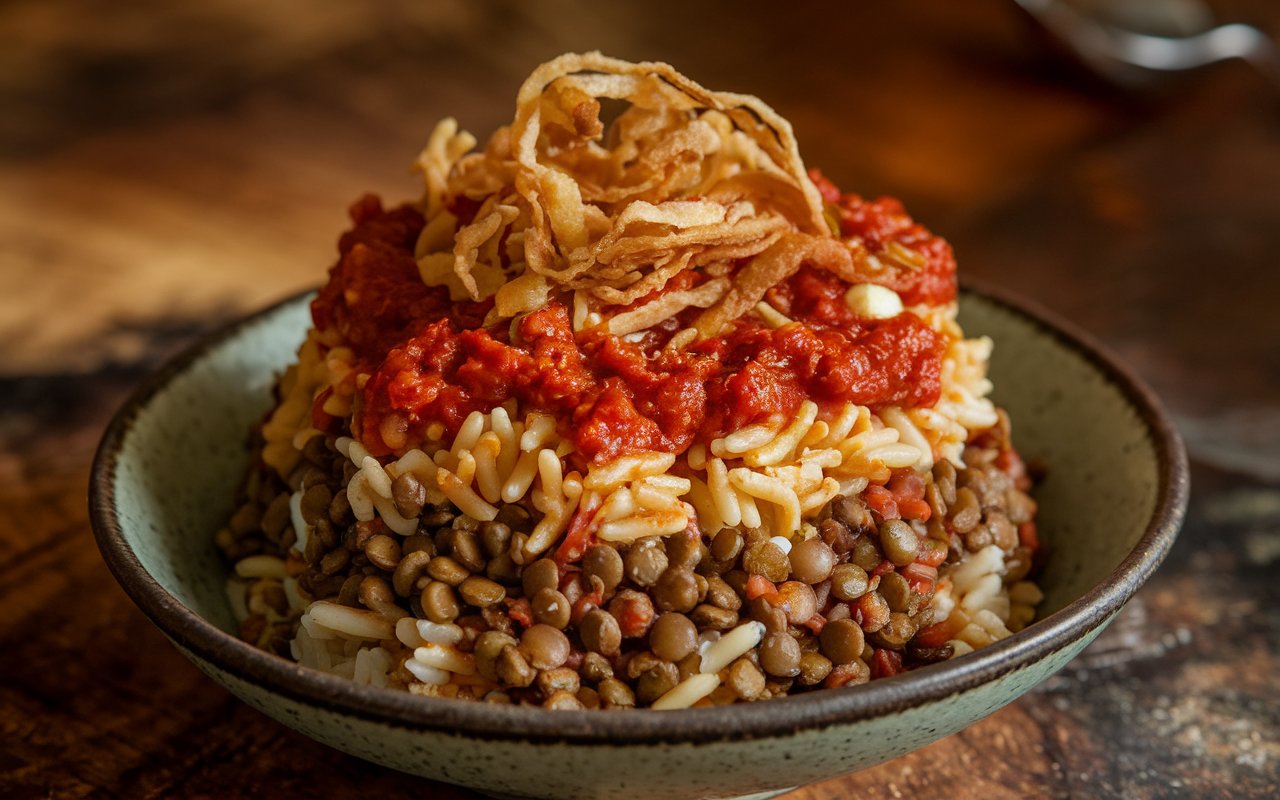
Walk through a bustling Egyptian street corner, and you’ll likely catch the aroma of Koshari: a layered concoction of lentils, rice, pasta, chickpeas, and a piquant tomato sauce, often crowned with crunchy fried onions. This hearty, vegan-friendly dish reigns as Egypt’s beloved street-food staple—both humble and deeply satisfying. Each spoonful merges starchy comfort with tangy sauce, while the crispy onions add a final layer of texture that keeps you returning for more. With minimal pricey ingredients, Koshari exemplifies how resourceful combos of pantry staples can shape an iconic national dish.
My personal discovery of Koshari came through a friend who recounted Egyptian travels—specifically, a memory of a small Cairo stall serving scoops of hot rice, lentils, spaghetti, and chickpeas, topped with onion rings and a spicy tomato sauce. Intrigued by how these everyday components, typically separate, could form a cohesive meal, I attempted it in my own kitchen. The magic lies in the layering: each grain, pasta shape, or pulse contributes a textural dimension, with the bright, chili-laced tomato sauce binding them into a complex mosaic of flavor. Now, Egyptian Koshari stands among my favorite comfort foods, reminding me that something as simple as grains and legumes can yield a deeply gratifying bowl.
In this guide, we’ll detail how to build Koshari step by step—cooking lentils, rice, and pasta, preparing the zesty sauce, and finishing with the essential fried onions. Whether you’re new to Middle Eastern flavors or already a fan of vegetarian comfort dishes, get ready for a layered street-food feast that merges everyday ingredients into a crowd-pleasing masterpiece.

Why Egyptian Koshari Captivates
- Layered Textures & Flavors
Rice provides fluff, lentils add earthiness, pasta offers a soft chew, chickpeas bring a nutty note, and crispy onions finalize the textural crescendo. - Budget-Friendly & Nourishing
Koshari is built from inexpensive staples (rice, lentils, pasta), making it an affordable dish high in protein and carbs, fueling Egyptians for busy days. - Signature Spiced Tomato Sauce
The sauce typically includes garlic, vinegar, and sometimes chili. This tangy, slightly spicy topping crowns the bland starches with an addictive brightness. - Street-Food Heritage
Served in specialized Koshari shops or from street stalls, it’s a unifying meal enjoyed by people across different classes and backgrounds—an edible testament to Egypt’s culinary democracy.
Ingredient Overview
Serves ~6–8:
| Ingredient | Quantity | Notes |
|---|---|---|
| White Rice (medium or long-grain) | 1 cup | Basmati or a standard white variety works, though short-grain is also possible |
| Brown or Green Lentils (dried) | ~1 cup | Avoid red lentils, as they become mushy quickly |
| Pasta (small shapes like elbow macaroni or small shells) | ~1½ cups dry | Spaghetti broken into segments is also common in Egyptian street style |
| Chickpeas (cooked) | 1 can (15 oz), drained or ~1½ cups if fresh-cooked | Another starchy layer |
| Onions (large, sliced) | 2 | For the fried onion topping |
| Oil (vegetable) | ~½–¾ cup for frying onions + 2–3 tbsp for sauce | Enough to crisp onions, plus some for sauce |
| Tomato Sauce (plain) | ~2 cups | Base for the spiced sauce |
| Garlic (minced) | 3–4 cloves | Key flavor in the sauce |
| Cumin, Coriander, Chili (for sauce) | 1–2 tsp cumin, 1 tsp coriander, chili flakes or powder to taste | Typical Egyptian flavor profile, adjust spice level |
| Vinegar (white or red) | 2–3 tbsp | Adds tang to the sauce, can use lemon juice as an alternative |
| Salt & Pepper | to taste | Season each layer as you go, especially the sauce |
| Water or Stock | as needed | For cooking rice, lentils, or thinning sauce |
| Optional Extras (chili sauce, fried garlic) | garnish or side | Koshari shops often have extra chili sauce or pickled peppers for heat |
(Note: If you want a more robust sauce, you can use a combination of tomato puree and tomato sauce, or add fresh diced tomatoes. The key is a tangy, somewhat spicy note finishing off the dish.)
Step-by-Step Recipe (Approx. 60–90 Minutes)
- Cook Lentils
- Rinse 1 cup lentils under cold water. In a saucepan, combine with ~3 cups water, bring to a boil, then reduce to simmer. Cook ~20–25 minutes until lentils are tender but not mushy. Drain, set aside. Season lightly with salt.
- Cook Rice
- Meanwhile, rinse 1 cup white rice until water runs clear. In another pot, bring ~2 cups water (or slightly less for a firmer texture) to a boil, add a pinch of salt and 1 tablespoon oil if desired, then stir in the rice. Cover, reduce heat to low, and cook ~15–18 minutes or until water absorbs. Fluff with a fork, set aside. Some prefer cooking it with a small amount of vermicelli as well, but that’s optional.
- Cook Pasta
- Bring a pot of water to boil, salt it generously. Cook ~1½ cups elbow macaroni (or spaghetti broken into 2-inch lengths) to al dente. Drain, toss with a bit of oil to prevent sticking.
- Fry Onions
- Slice 2 large onions into thin rings or half-moons. Heat ~½ cup vegetable oil in a skillet over medium-high. Once hot, add onions in batches, stirring occasionally. Cook until golden-brown and crispy ~8–10 minutes. Remove with a slotted spoon, place on paper towels. Season lightly with salt. Watch carefully to avoid burning—slightly browned onions add flavor, but can easily go from golden to black if left unwatched.
- Prepare Spiced Tomato Sauce
- In a small pot or saucepan, heat 2 tablespoons oil over medium. Add minced garlic (3–4 cloves), sauté ~30 seconds until fragrant. Stir in 2 cups tomato sauce. Season with 1–2 teaspoons cumin, 1 teaspoon coriander, chili flakes or powder to preference, plus 2–3 tablespoons vinegar. Simmer ~10 minutes to blend flavors. Add salt/pepper to taste. If too thick, thin with a bit of water. If too tangy, add a pinch of sugar. This sauce should be bold, tangy, and slightly spicy.
- Layer Components
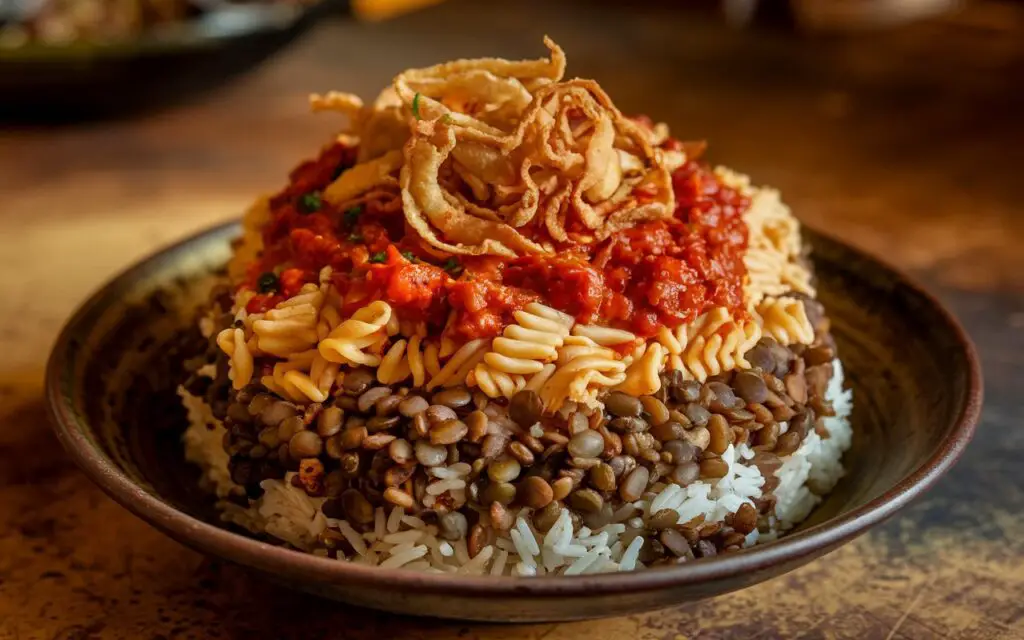
- Traditional Koshari layering:
- A base of rice in a serving dish.
- A layer of lentils on top.
- A layer of pasta.
- Spoon chickpeas over.
- Generous drizzle of the spiced tomato sauce.
- Crown with fried onions.
Alternatively, you can mix lentils, pasta, chickpeas with the rice if you prefer. The top garnish of crisp onion is essential for final crunch.
- Traditional Koshari layering:
- Serve
- Offer extra sauce or chili sauce on the side. Diners typically stir everything together on their plate, ensuring each bite includes a bit of every layer. Enjoy the interplay of textures—soft starches, tangy sauce, and onion crunch.
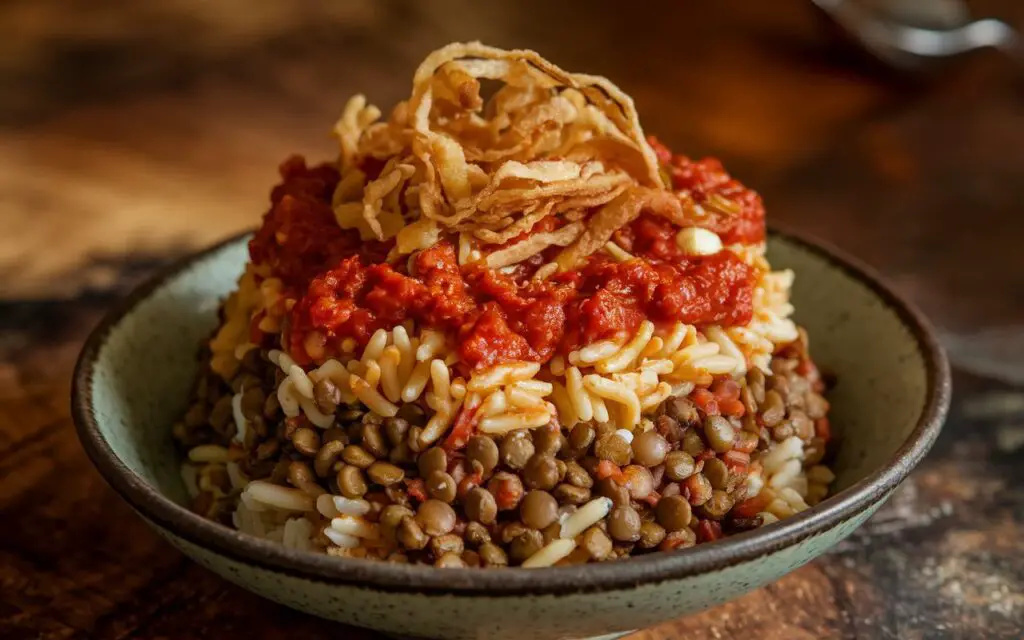
(Note: Some also supply a garlic-vinegar-chili sauce separately, letting each diner add more tang or heat. The key to Koshari’s success is ensuring each starchy component (lentils, rice, pasta) is properly cooked yet not mushy, layering them distinctly, and finishing with a robust sauce and crisp onions.)
Flavor Variations
- Extra Proteins
- Koshari is typically vegetarian. However, some untraditional versions might add leftover beef or lamb. This changes the character significantly, shifting from the dish’s original meatless identity.
- Spicier Sauce
- Increase chili or add a scotch bonnet or habanero while simmering the sauce for a fiery twist. Keep a mild version on the side for those less tolerant of heat.
- Whole-Grain Approach
- Use brown rice or whole-wheat pasta for added fiber. The cooking times differ slightly, so ensure each component remains separate until final layering.
- Herb Toppings
- While not standard, a sprinkling of fresh parsley or cilantro can add brightness. Some cooks find it helps lighten the heavy starch base.
Serving & Storage
- Presentation
- A large, shallow serving dish helps display Koshari’s layers attractively. Alternatively, serve family-style in a big pot for a more casual approach.
- Side Dishes
- Koshari stands alone as a complete meal. Some folks serve a small cucumber-tomato salad on the side or a bowl of pickled vegetables for tangy contrast.
- Leftovers
- Refrigerate up to 2 days. Reheat gently in the microwave or stovetop, adding a splash of water if dryness occurs. Fried onions might lose crunch, so consider fresh onions or re-frying for leftover servings.
- Party Prep
- You can pre-cook lentils, rice, and pasta. Just store them individually. Fry onions the day of or re-fry them if needed. Then layer and warm everything in an oven or on a buffet station with sauce on the side.
Key Tips for Authentic Koshari
- Avoid Overcooking
- Soft, mushy lentils or sticky, overdone pasta degrade the layered experience. Each component should be distinct in texture.
- Vinegar in Sauce
- The tang is crucial. If you skip vinegar, the sauce might feel flat. A bit of sugar or sweetener can help balance acidity if the sauce becomes too sour.
- Crispy Fried Onions
- Let them reach a solid golden hue, but not burnt. Achieving that perfect crisp is essential. A pinch of salt at the end helps highlight flavor.
- Sauce & Hot Sauce
- Often, an extra chili sauce or hot sauce is offered for those who want an even spicier kick. Keep sauce separate so each diner can customize heat levels.
FAQ – Egyptian Koshari
Q1: Is it always vegetarian?
A1: Traditionally yes, Koshari is meat-free, making it a staple for many Egyptians and an easy option for vegetarians. Some modern variants might add meat, but that’s not typical.
Q2: Could I skip chickpeas if I don’t have them?
A2: Chickpeas add another layer of texture and protein. If unavailable, the dish can still proceed with lentils, rice, and pasta. It’s slightly less traditional but remains tasty.
Q3: Is there a quick way to do the onions?
A3: You can oven-bake onions tossed with oil at 400°F (205°C) until crisp, or use an air fryer. The flavor might differ slightly from deep or shallow frying, but it’s a lower-oil approach.
Q4: Do I have to layer everything, or can I mix it all?
A4: Some prefer mixing everything except the onions in a pot, then topping with onions. The layering is iconic for presentation. Ultimately, it’s your preference.
Q5: Can I use red lentils for a faster cook?
A5: Red lentils break down into a mush, changing Koshari’s fundamental structure. Brown or green lentils maintain shape. The distinct lentil layer is part of the dish’s essence.
Conclusion

Interweaving lentils, rice, pasta, and chickpeas under a piquant tomato sauce crowned with crisp fried onions, Egyptian Koshari is a testament to how simple staples can combine into a texturally and flavorfully layered feast. Beloved on Cairo’s streets and in Egyptian households, it celebrates thrift, flavor, and tradition in a single, bountiful dish. Each forkful invites diners to appreciate the tangy sauce, hearty grains, and the distinct crunch that only well-fried onions can provide.
Now that you know how to cook each element—preventing mushy lentils or soggy pasta, perfecting the spiced tomato sauce, and achieving a crispy onion topping—why not recreate this Middle Eastern street-food gem in your own kitchen? After savoring that final bite—maybe with extra chili sauce or a side salad—drop back and share your personal touches. Did you incorporate different legumes, dial up the spice, or garnish with fresh herbs? Your creativity might inspire others to discover how Koshari can unify modest ingredients into a rich, layered delight.