


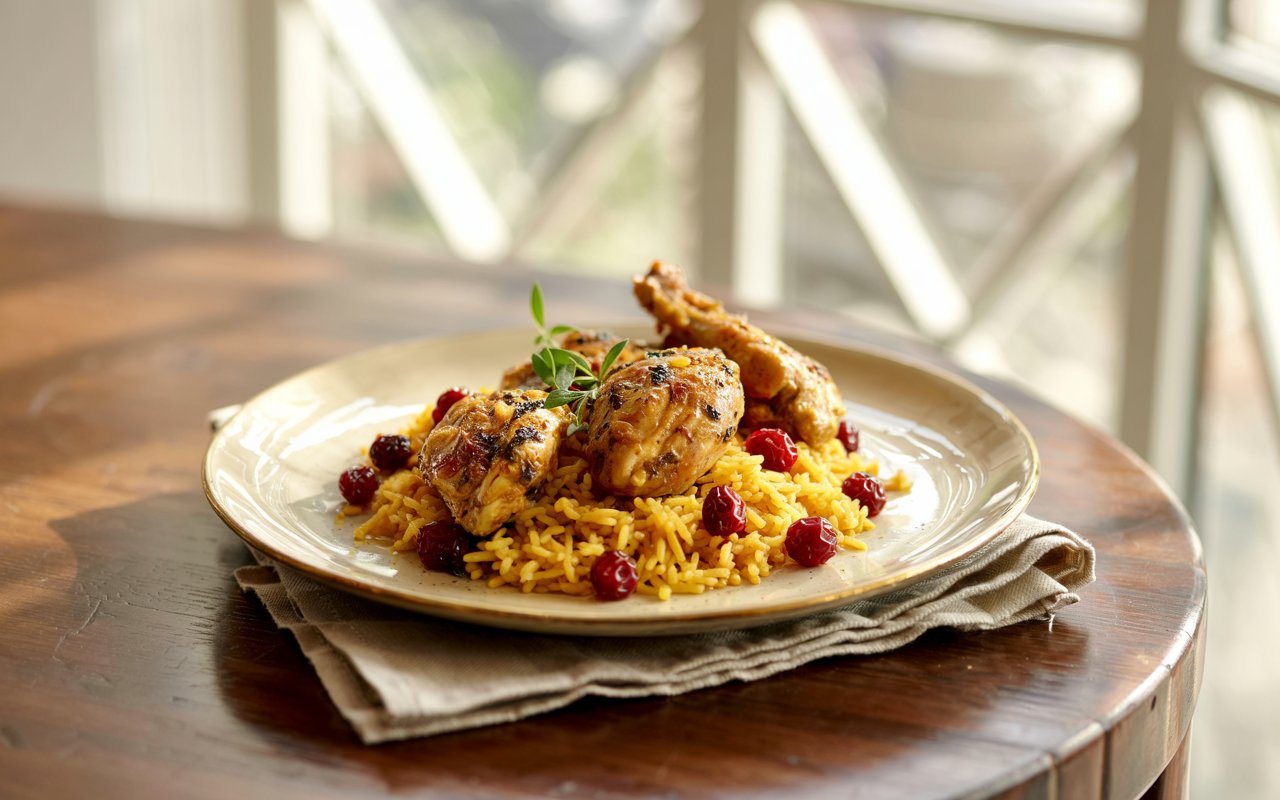
Imagine a dining experience where every bite is infused with centuries of culinary tradition—fragrant saffron rice studded with jewel‑like barberries, served alongside tender, herb‑marinated chicken that melts in your mouth. Persian Zereshk Polo with Saffron Chicken is a luxurious dish that elevates your table with its vibrant colors, enticing aromas, and a medley of flavors that are both complex and harmonious. This iconic Iranian dish marries the rich earthiness of saffron‑infused rice with the tangy burst of zereshk (barberries), while succulent chicken, marinated with fresh herbs, adds protein and depth. I vividly recall my first encounter with this dish—a sensory journey of sweet, tart, and savory notes that felt like a celebration of culture and tradition. Perfect for festive occasions or an indulgent weekend meal, this recipe promises to deliver both visual splendor and culinary delight.
The Inspiration Behind the Dish
Persian cuisine is renowned for its artistry and balance of flavors, where sweet, sour, and savory coexist in perfect harmony. My inspiration for Persian Zereshk Polo with Saffron Chicken stems from my deep admiration for Iranian culinary traditions and the meticulous care with which each dish is prepared. Zereshk, or barberries, are tiny red berries prized for their tart flavor and antioxidant properties, while saffron—the world’s most expensive spice—imparts a luxurious aroma and vivid golden hue to the rice. The combination of these ingredients, along with tender chicken marinated in fresh herbs such as mint, parsley, and lemon, reflects the Iranian philosophy that food should not only nourish the body but also delight the senses and evoke cherished memories. This dish transports you to the bustling bazaars and intimate family gatherings of Iran, where every meal is an event imbued with history and heart.
Ingredient Insights & Nutritional Harmony
Every element in this dish plays a critical role in creating a well-balanced and wholesome meal. Saffron, though used sparingly, is a powerhouse of flavor and antioxidants. It not only colors the rice a mesmerizing gold but also adds a subtle floral note that enhances every component. The barberries, or zereshk, offer a unique tartness that cuts through the richness of the saffron rice, providing a bright contrast that awakens the palate. The rice itself is traditionally prepared with a crispy tahdig (the golden crust that forms at the bottom), adding textural intrigue and a savory caramel note. The chicken, marinated with a blend of herbs and lemon, infuses the dish with a tangy brightness and provides high‑quality protein, essential for maintaining energy and muscle integrity. Altogether, this meal is a celebration of nutrient‑dense ingredients that deliver a balanced combination of carbohydrates, proteins, healthy fats, antioxidants, and essential vitamins and minerals.

Key Ingredients & Their Role
- Saffron: Offers a unique, aromatic flavor and a brilliant golden hue to the rice. Its antioxidant properties further enhance the health benefits of the dish.
- Zereshk (Barberries): These tiny red berries introduce a pleasantly tart contrast to the sweet, rich saffron rice, adding complexity and a burst of color.
- Basmati Rice: The ideal grain for this dish, its long, slender grains absorb the flavors and maintain a delicate, fluffy texture, enhanced by the formation of a crispy tahdig.
- Chicken: Marinated in a blend of fresh herbs, lemon, and spices, the chicken is slowly roasted or grilled until tender and juicy, contributing a savory depth that complements the rice.
- Herbs (Mint, Parsley, and Dill): These fresh herbs create a bright, aromatic marinade for the chicken and are often used as a garnish to elevate the final presentation.
- Lemon Juice: Adds acidity and brightness, balancing the richness of the saffron and the tartness of the barberries.
- Spices (Cinnamon, Cardamom, and Black Pepper): A delicate blend of spices that enhances the flavor profile without overwhelming the natural taste of the ingredients.
Ingredients Table
| Ingredient | Quantity | Purpose/Notes |
|---|---|---|
| Basmati Rice | 2 cups (uncooked) | The base of the dish; provides a light, aromatic canvas for saffron and barberries |
| Saffron Threads | A generous pinch (about 0.1 gram) | Infuses the rice with its distinctive aroma, color, and antioxidants |
| Water or Chicken Broth | 4 cups | Used for cooking the rice, enhances flavor when using broth |
| Zereshk (Barberries) | 1/2 cup | Imparts a tart, fruity burst that balances the saffron sweetness |
| Sugar | 1-2 tablespoons | Helps counterbalance the natural tartness of the barberries (adjust based on taste preference) |
| Salt | To taste | Essential for seasoning the rice |
| Vegetable Oil or Butter | 3-4 tablespoons | Used to prepare the tahdig (crispy rice crust) |
| Chicken (preferably bone‑in, skin‑on pieces) | 1.5 to 2 pounds | Provides rich, tender meat that absorbs the herb marinade beautifully |
| Fresh Mint Leaves | 1/4 cup, finely chopped | Part of the herb marinade, adds brightness and freshness |
| Fresh Parsley | 1/4 cup, finely chopped | Enhances the marinade with a robust, earthy flavor |
| Fresh Dill | 2 tablespoons, chopped | Contributes a subtle, aromatic note |
| Lemon Juice | 3 tablespoons | Brightens the chicken marinade and the overall dish |
| Olive Oil | 2 tablespoons | For marinating the chicken and adding richness to the dish |
| Ground Black Pepper | 1/2 teaspoon | For seasoning the chicken and rice |
| Cinnamon (ground) | 1/4 teaspoon | Adds a warm, subtle sweetness to the marinade |
| Cardamom (ground) | A pinch | Provides a delicate floral note that enhances the overall flavor |
Step-by-Step Recipe Instructions
Preparing the Saffron Rice
- Soak the Saffron:
- Place the saffron threads in a small bowl with 2 tablespoons of warm water or hot chicken broth. Allow it to steep for at least 15-20 minutes to extract its vibrant color and aromatic essence.
- Rinse the Rice:
- Rinse 2 cups of basmati rice under cold water until the water runs clear. This step removes excess starch, ensuring that the rice cooks up fluffy and separate. Drain well.
- Cook the Rice:
- In a large pot, bring 4 cups of water (or chicken broth for extra flavor) to a boil. Add the rinsed rice and a pinch of salt. Allow it to boil for about 5 minutes, then drain the rice in a fine mesh strainer.
- Rinse the partially cooked rice with warm water to stop the cooking process. Set aside.
- Layer the Rice with Saffron:
- Return the drained rice to the pot and gently fold in the saffron water along with the steeped saffron threads. Mix carefully so that every grain is tinted with the saffron’s golden hue.
Creating the Tahdig (Crispy Rice Crust)
- Prepare the Pot:
- Heat 3-4 tablespoons of vegetable oil or butter in a heavy-bottomed pot over medium heat. Ensure the oil is well distributed across the bottom.
- Layer the Rice:
- Add a thin, even layer of the saffron rice to the pot. Press down gently with the back of a spoon to compact the rice, forming a solid crust. Reserve the remaining rice for later layering.
- Build the Layers:
- Once the bottom layer is in place, gently spoon the remaining rice on top, mounding it slightly to form a dome. Cover the pot with a tight-fitting lid and reduce the heat to low.
- Allow the rice to cook slowly for 20-25 minutes. This steaming process will develop the tahdig—a golden, crispy layer at the bottom. Do not disturb the pot during this time.
- Check the Tahdig:
- After cooking, check that the bottom layer has turned a deep, golden brown. If desired, you can carefully flip the rice onto a serving platter to showcase the crispy tahdig, though it can also be served as is, offering a delightful contrast between the soft rice and crispy crust.
Preparing the Herb‑Marinated Chicken
- Marinate the Chicken:
- In a large bowl, combine the chicken pieces with 2 tablespoons of olive oil, 3 tablespoons of fresh lemon juice, chopped mint, parsley, and dill. Add a pinch of cinnamon, a dash of cardamom, salt, and ground black pepper.
- Toss the chicken well to ensure it is evenly coated with the herb marinade. Cover and refrigerate for at least 1 hour, or ideally overnight, to allow the flavors to penetrate the meat deeply.
- Cook the Chicken:
- Preheat your oven to 375°F (190°C). Place the marinated chicken on a baking sheet lined with parchment paper. For extra flavor, arrange the chicken pieces skin-side up so that they crisp nicely during baking.
- Bake the chicken for 30-40 minutes, or until the internal temperature reaches 165°F (74°C) and the skin is crispy and golden. If desired, you can baste the chicken halfway through cooking with any remaining marinade.
Assembling the Dish
- Fluff the Rice:
- Once the rice is done and the tahdig is formed, gently fluff the rice using a fork, taking care not to break up too much of the crispy bottom layer. If you prefer, you can slice the tahdig and serve it on top or on the side.
- Plate the Dish:
- On a large serving platter, spread a layer of saffron rice, ensuring some of the crispy tahdig is visible. Arrange the herb‑marinated chicken pieces artfully on top of the rice.
- For an additional burst of flavor, drizzle any remaining juices from the cooked chicken over the dish.
Presentation & Serving Suggestions
Present your Persian Zereshk Polo with Saffron Chicken on a beautiful, decorative platter that highlights its gorgeous golden rice and vibrant herb‑marinated chicken. For a traditional touch, garnish the dish with a handful of lightly toasted zereshk (barberries) that have been gently rinsed and soaked in warm water for a few minutes to plump them up. The tart burst of these berries is essential—they provide a delightful contrast to the sweet, aromatic saffron rice and savory chicken.
Serve the dish with a side of yogurt or a simple cucumber salad dressed with lemon and mint to balance the richness. A side of flatbread or pita can also complement the meal by providing a vehicle to scoop up every last delicious bite.

Tips & Tricks for Success
- Rice Perfection:
Rinse the rice thoroughly and avoid overcooking it in the initial boiling step. The goal is to partially cook the rice so that it absorbs the saffron water perfectly, and then finish cooking it in the pot to develop the desired texture and the tahdig. - Crispy Tahdig:
Do not disturb the rice while it forms the tahdig. Patience is key—allow the rice to steam slowly over low heat to develop a deep, crispy crust that adds an irresistible texture contrast. - Marinating the Chicken:
For maximum flavor infusion, marinate the chicken overnight. This not only tenderizes the meat but also allows the herbs and spices to work their magic, resulting in succulent, flavor‑packed chicken. - Balancing Flavors:
Adjust the amount of lemon juice, herbs, and spices to suit your taste. Persian cuisine celebrates balance, so aim for a harmonious blend of savory, tangy, and aromatic flavors. - Zereshk Preparation:
If using dried barberries, rinse them lightly and soak in warm water for about 10 minutes to soften their tartness before sprinkling them over the final dish. You can also toss them with a tiny bit of sugar if extra sweetness is desired. - Herb Freshness:
Always add fresh herbs at the last minute to preserve their vibrant color and flavor. Overcooked herbs can lose their punch and become bitter.
Frequently Asked Questions (FAQs)
Q: Can I make this dish ahead of time?
A: Yes, the chicken can be marinated a day ahead and the rice can be partially cooked ahead of time. However, for the best texture, it’s recommended to assemble and finish the cooking of the rice just before serving to preserve the crispy tahdig.
Q: What can I substitute for basmati rice if it isn’t available?
A: While basmati is traditional for its aromatic qualities and long, slender grains, you can substitute with other long‑grain rice varieties. Adjust the water ratio accordingly, and be aware that the flavor profile may change slightly.
Q: Is this dish gluten‑free?
A: Yes, this recipe is naturally gluten‑free, assuming that all ingredients such as the marinade spices and broth (if used) are gluten‑free. Always check labels if you have specific dietary restrictions.
Q: Can I use chicken breasts instead of bone‑in, skin‑on pieces?
A: While bone‑in, skin‑on chicken is preferred for its richer flavor and juiciness, you can use chicken breasts if desired. Just be mindful that breasts may require a shorter cooking time to prevent them from drying out.
Q: How can I enhance the flavor of the saffron rice further?
A: Using chicken broth instead of water, adding a few saffron threads, and allowing them to steep fully in warm liquid can intensify the flavor. Also, letting the rice rest covered for a few minutes after cooking helps the flavors meld beautifully.
Q: What are traditional sides for this dish?
A: Persian Zereshk Polo is often served with a side of mast-o-khiar (a yogurt and cucumber dip) or a simple salad of fresh herbs and tomatoes. These sides offer a refreshing contrast to the rich, savory flavors of the chicken and rice.
Conclusion
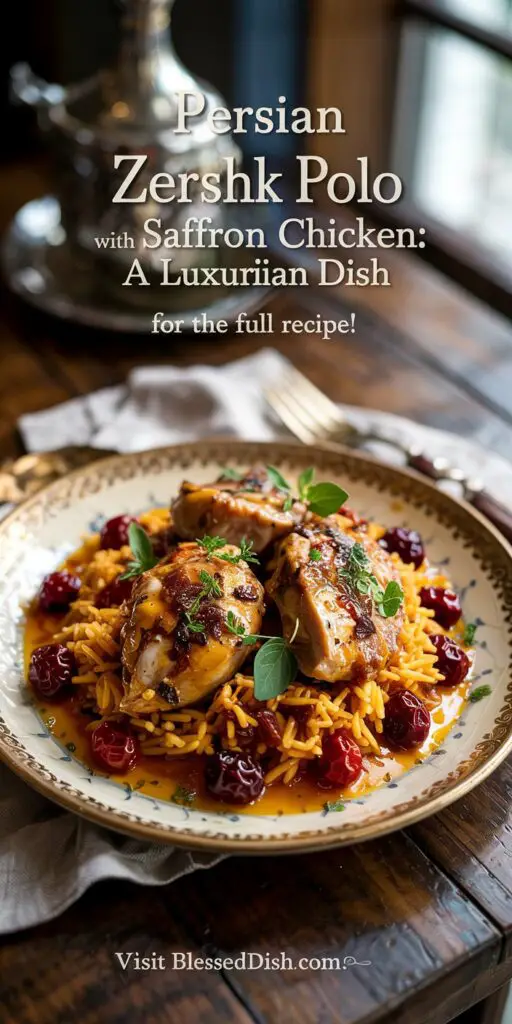
Persian Zereshk Polo with Saffron Chicken is a celebration of Iranian culinary artistry—a dish where every element works in harmony to deliver a meal that is as nourishing as it is enchanting. With its saffron‑infused basmati rice, tangy barberries, and succulent herb‑marinated chicken, this recipe transports you to a world of robust flavors and timeless tradition. Whether you’re hosting a special dinner or treating yourself to an indulgent meal on a quiet evening, this dish promises to captivate your senses and leave you with a lasting impression of elegant, soulful cooking.
I invite you to recreate this luxurious Iranian dish in your own kitchen, experiment with the flavors, and share your unique twists and experiences with our community. Please leave your feedback in the comments below or tag your photos on social media with #PersianFeastDelight. Your culinary journeys and creative adaptations not only inspire others but also help to spread the joy of authentic, global cuisine.
Enjoy your Persian Zereshk Polo with Saffron Chicken, and may every bite bring you closer to the rich heritage and vibrant flavors of Iranian cuisine. Bon Appétito and happy cooking!