


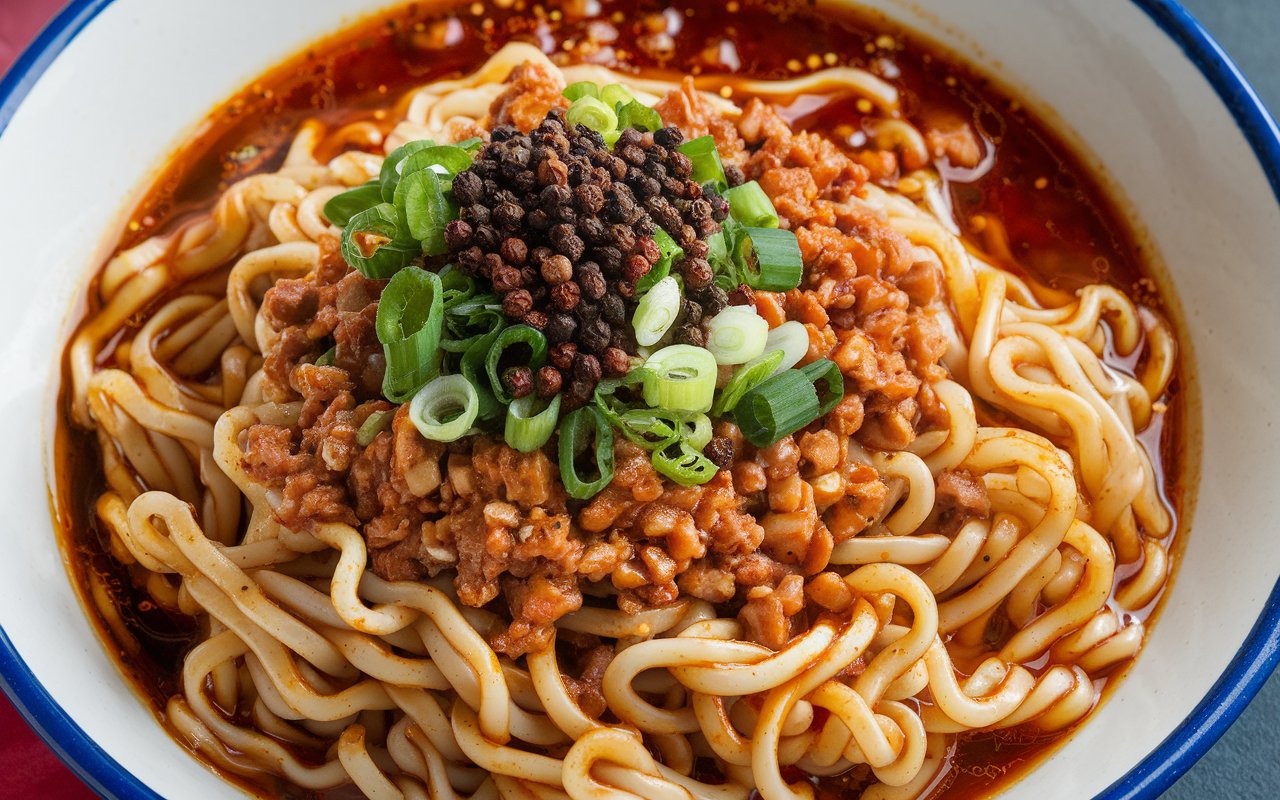
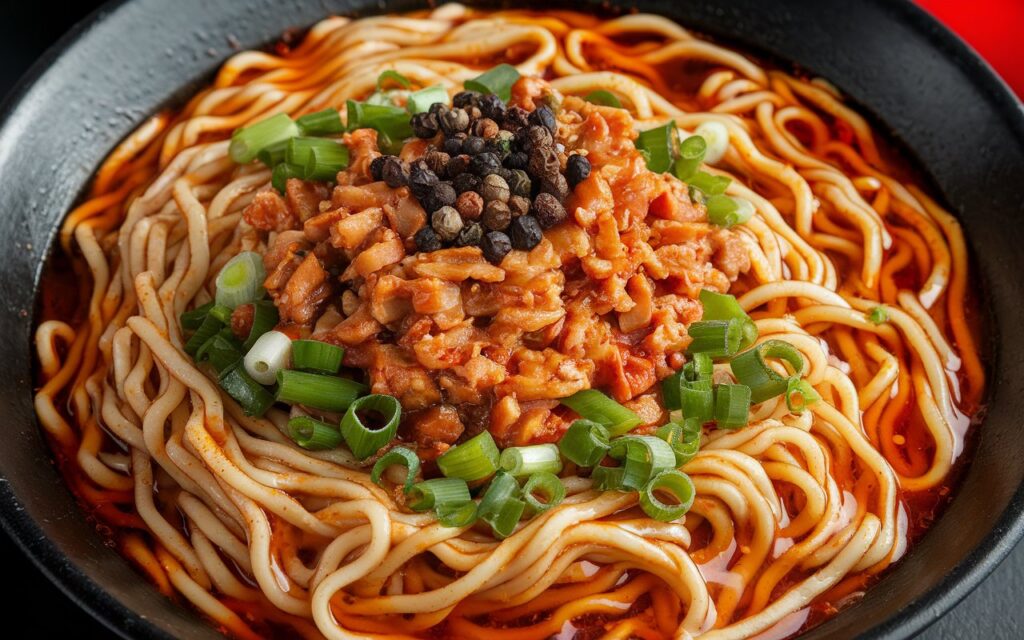
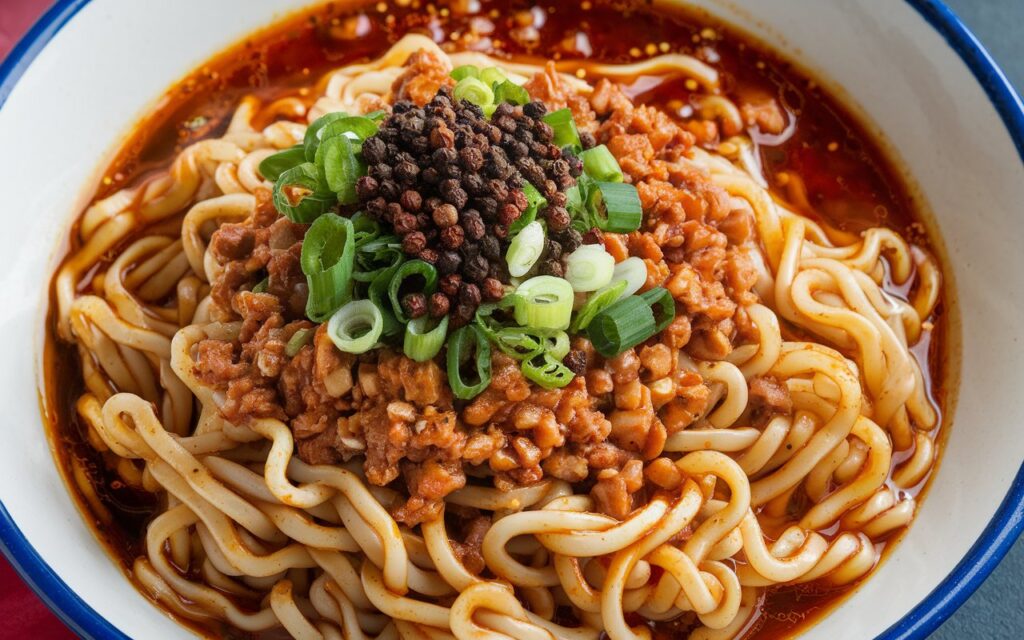
Envision a steaming bowl of thin wheat noodles, topped with a spicy, numbing chili oil and savory minced meat sauce—punctuated by the tingle of Sichuan peppercorns that leaves your tongue buzzing in delight. This is the realm of Dan Dan Noodles, a Sichuan street staple that merges the region’s hallmark bold flavors: heat from dried chilies, aromatic depth from peppercorns, and a sweet-salty meat sauce that often features preserved vegetables. Each chopstick-full unites a swirl of spicy sauce, specks of crispy ground pork, and slivers of fresh scallion or cucumber that cut through the intensity, ensuring a layered taste that’s simultaneously fiery, savory, and deeply satisfying.
My introduction to Dan Dan Noodles came through a tiny Sichuan-style eatery where I experienced that famed numbing heat (known as málà) for the first time—my lips tingling, my senses awakened. Determined to replicate it, I discovered the interplay of chili oil, Sichuan pepper, fermented bean paste, and soy sauce to build a signature sauce, then balanced it with sweet or sour hints to keep it from overwhelming the palate. Over repeated attempts, I fine-tuned the ratio of chili to peppercorn, ensuring the dish’s personality remained robust without overshadowing the wheat noodles. Now, Chinese Dan Dan Noodles is my go-to for a quick lunch that’s anything but bland—both comforting and exhilarating with every slurp.
In this guide, we’ll walk through how to build Dan Dan Noodles—from concocting a punchy chili sauce and stir-frying minced pork (or a substitute), to assembling the noodle bowl with fresh garnishes. Whether you’re a Sichuan spice aficionado or just intrigued by the hype around Dan Dan’s numbing heat, gear up for a bowl that merges robust flavors, tantalizing textures, and that distinctive Sichuan flair.

Why Chinese Dan Dan Noodles Dazzle
- Iconic Sichuan Heat
The combination of chili oil and Sichuan peppercorns yields the famed málà (spicy-numbing) sensation, a hallmark of the region’s cuisine. - Balance of Savory Elements
A sweet soy sauce or sugar component offsets the intense chili-peppercorn burn, while fermented bean paste or preserved vegetables add a subtle tangy-salty complexity. - Quick Street-Food Dish
Typically, Dan Dan Noodles are served from roadside vendors, who prepare it swiftly. Recreating it at home can be just as speedy once the sauce is prepped and ingredients gathered. - Flexible Protein
Traditionally, ground pork or beef is used. But you can adopt ground chicken, turkey, or even tofu crumbles if you desire a lighter or vegetarian route.
Ingredient Overview
Makes ~3–4 servings:
| Ingredient | Quantity | Notes |
|---|---|---|
| Noodles (thin wheat noodles, e.g., ramen or thin egg noodles) | ~8 oz | Authentic Sichuan often uses thin wheat noodles |
| Ground Pork (or beef, chicken, tofu) | ~½ lb | Commonly pork for a rich flavor |
| Sichuan Peppercorns (roasted & ground) | 1–2 tsp (to taste) | Key to numbing effect, start small if new to it |
| Chili Oil (homemade or store-bought) | ~2–4 tbsp | Adjust for spice tolerance |
| Soy Sauce | ~2–3 tbsp | The base of the savory sauce |
| Chinese Sesame Paste or Tahini | ~2 tbsp | Adds creaminess, optional in some recipes, but typical in modern versions |
| Sugar or Sweetener | ~1 tbsp | Balances spice; some use black vinegar or sweet bean paste instead |
| Garlic & Ginger (minced) | 1–2 cloves garlic, 1 inch ginger | For the meat sauce aromatic |
| Chili Bean Paste (Doubanjiang) (optional) | ~1–2 tbsp | Highly recommended for authenticity, can skip if unavailable |
| Chicken/Beef Stock or Water | ~½–1 cup | For adjusting sauce consistency |
| Green Onions (chopped) | 2–3 | Garnish, plus some for stir-frying the meat |
| Optional Preserved Vegetables (zha cai, ya cai) | ~¼ cup chopped | Traditional topping, adds umami and tang |
| Salt & Pepper | to taste | Adjust carefully, considering salted sauces |
| Oil (vegetable) | ~1–2 tbsp | For stir-frying the meat |
(Note: Doubanjiang (broad bean chili paste) is crucial in many Sichuan dishes. If unavailable, a mix of chili sauce + fermented bean sauce can approximate. The sesame paste addition is more modern but widely accepted for extra creaminess in the sauce. For a more old-school approach, skip it.)
Step-by-Step Recipe (Approx. 30–40 Minutes)
- Prep Sauce Base
- In a small bowl, combine ~2 tablespoons chili oil (or more if you want spicier), 2 tablespoons soy sauce, 1 tablespoon sesame paste (if using), 1 tablespoon sugar, and 1 tablespoon Doubanjiang (if using). Mix thoroughly. Taste, adjusting for sweet-heat balance. Keep aside.
- Toast & Grind Sichuan Peppercorns
- If using whole peppercorns, lightly toast them in a dry pan until fragrant, ~1 minute. Let cool, then grind to a coarse powder. Set aside. Some prefer sifting out bigger husks for a smoother texture.
- Cook Noodles
- Bring a pot of water to boil. Cook ~8 oz thin wheat noodles as per instructions, typically ~3–4 minutes for fresh, or 6–8 for dried. Drain, toss with a dash of oil to prevent sticking. Keep warm.
- Stir-Fry Meat
- Heat 1–2 tablespoons oil in a wok or skillet over medium-high. Add minced garlic (~1–2 cloves), ginger (~1 inch, grated), plus 1 chopped green onion if desired. Sauté ~30 seconds.
- Stir in ~½ lb ground pork (or other protein). Break up lumps, cooking ~4–5 minutes until browned. Season with a small pinch of salt, pepper. If you have preserved vegetables (zha cai or ya cai), toss in a spoonful now, adding salty-sour dimension.
- Add Sauce & Simmer
- Spoon the prepared chili-soy-sesame sauce mix over the meat. Stir to coat. Pour in ~½ cup stock or water to create a slightly saucy consistency. Simmer ~2–3 minutes. If the sauce thickens too much, add more stock. If too loose, simmer further. The mixture should be robustly flavored, as it’s the main topping for plain noodles.
- Assemble Dan Dan Bowls
- In each serving bowl, place a small spoonful of chili oil (if you desire extra spice) or leftover sauce. Add a portion of cooked noodles. Ladle the spiced meat mixture on top. Drizzle more sauce if needed. Optionally, you can toss noodles in sauce first before plating, ensuring even coating.
- Finish & Garnish
- Sprinkle ground Sichuan peppercorns for the numbing effect. Top with chopped green onions, additional chili oil if you crave more heat, or a drizzle of sesame oil. Some prefer a final sprinkling of peanuts or crushed roasted sesame seeds for texture.
(Note: The classic approach can vary from a ‘dry’ version to a more ‘soupy’ approach. Adjust the sauce thickness by how much stock you add. Doubanjiang usage might reduce the need for additional salt, so always taste the final sauce before seasoning further.)
Flavor Variations
- Creamier Dan Dan
- Increase sesame paste for a more velvety sauce. This modern interpretation is popular, especially in Western adaptations, but a more traditional version might keep sesame minimal or absent.
- Vegetarian / Vegan
- Replace ground meat with crumbled tofu or tempeh. Season well. Doubanjiang and chili oil remain central. The rest of the method is largely unchanged.
- Extra Sour Twang
- Stir in a teaspoon of Chinese black vinegar if you want a tangy note. Some variations incorporate a mild sourness balancing the chili heat.
- All-out Spice
- Double the scalding chili oil, add more Doubanjiang, and keep the scotch bonnet-level chili if you truly relish intense heat. But be mindful of your diners’ tolerance.
Serving & Storage
- Plate or Bowl
- Typically served in individual bowls. Diners mix the noodles with sauce themselves, ensuring a personal experience adjusting the ratio of sauce-to-noodle.
- Side Dishes
- Dan Dan Noodles often star solo as a snack or quick meal. Accompany with a simple cucumber salad or bok choy for a balanced table.
- Leftovers
- The sauce can be stored up to 2 days. Reheat gently. Noodles often clump after cooling, so refreshing them in hot water or a quick stir-fry helps.
- Party Approach
- For gatherings, keep the sauce warm in a pot. Let guests top their own noodles. Provide extra chili oil and peppercorn on the side.
Key Steps for Authentic Taste
- Sichuan Peppercorn
- The trademark numbing effect demands fresh peppercorns. Stale ones lose potency. Toast briefly to unlock maximum aroma, then grind or crush.
- Doubanjiang
- The fermented chili-bean paste brings an earthy tang. If you skip it, you lose a chunk of authentic depth. Try searching for Pixian Doubanjiang for the best brand.
- Chili Oil
- Using a robust, aromatic chili oil elevates the final heat note. Store-bought can suffice, but homemade chili oil might deliver a fresher, more intense flavor.
- Noodles
- Thin, round wheat noodles are typical. In a pinch, spaghetti or angel hair can stand in. The cooking time may vary, so watch for al dente, not mushy.
FAQ – Chinese Dan Dan Noodles
Q1: Is peanut butter part of the sauce?
A1: Some Americanized versions add peanut butter for creaminess. Traditional Sichuan versions rely on sesame paste (zhīma jiàng) rather than peanut. That said, a peanut variation can still be delicious, albeit less orthodox.
Q2: Must it be pork?
A2: The classic approach typically uses ground pork. However, ground beef or turkey is possible. Vegetarians can use crumbled tofu or mushrooms to mimic the meat texture. The sauce’s flavor unifies it all.
Q3: My sauce is too spicy—how to fix?
A3: Increase sesame paste or add a bit of sugar to tame the heat. A drizzle of mild stock or water can also dilute intensity. Next time, reduce the chili oil or Doubanjiang ratio.
Q4: Does it always contain a soup or broth?
A4: Variations exist. Some are “dry” style (less broth, more sauce clinging to noodles). Others lean “soupy,” including more stock for a slurpable base. Decide your preference—both are recognized forms.
Q5: Can I skip the vinegar or sugar?
A5: Some do add black vinegar or sugar. Others keep it purely chili-based with sesame paste, soy sauce, etc. The dish is quite flexible regionally, so adjust to preference, though a mild sweet-sour balance helps offset the spice.
Conclusion
Combining Sichuan pepper’s numbing zing, chili oil’s fiery warmth, and a savory minced meat sauce ladled over delicate noodles, Dan Dan Noodles offers a taste of classic Chinese street food that’s both comforting and electrifying. The interplay of bold spice, aromatic fermented bean paste, and the robust chew of wheat noodles results in a dish that dazzles the palate—inviting a swirl of flavors that lingers even after the bowl is empty.
Now that you know how to build the sauce, toast and grind peppercorns, and time the noodles for an al dente finish, why not stir up a pot next time you crave a spicy, mouth-tingling meal? After that final noodle slurp—maybe topped with extra pepper or a swirl of chili oil—share your adventures. Did you swap in a vegan protein, dial up the chili factor, or adopt a soupier variant? Your personal spin might guide fellow spice aficionados to discover the addictive pull of Dan Dan Noodles right in their home kitchens.