


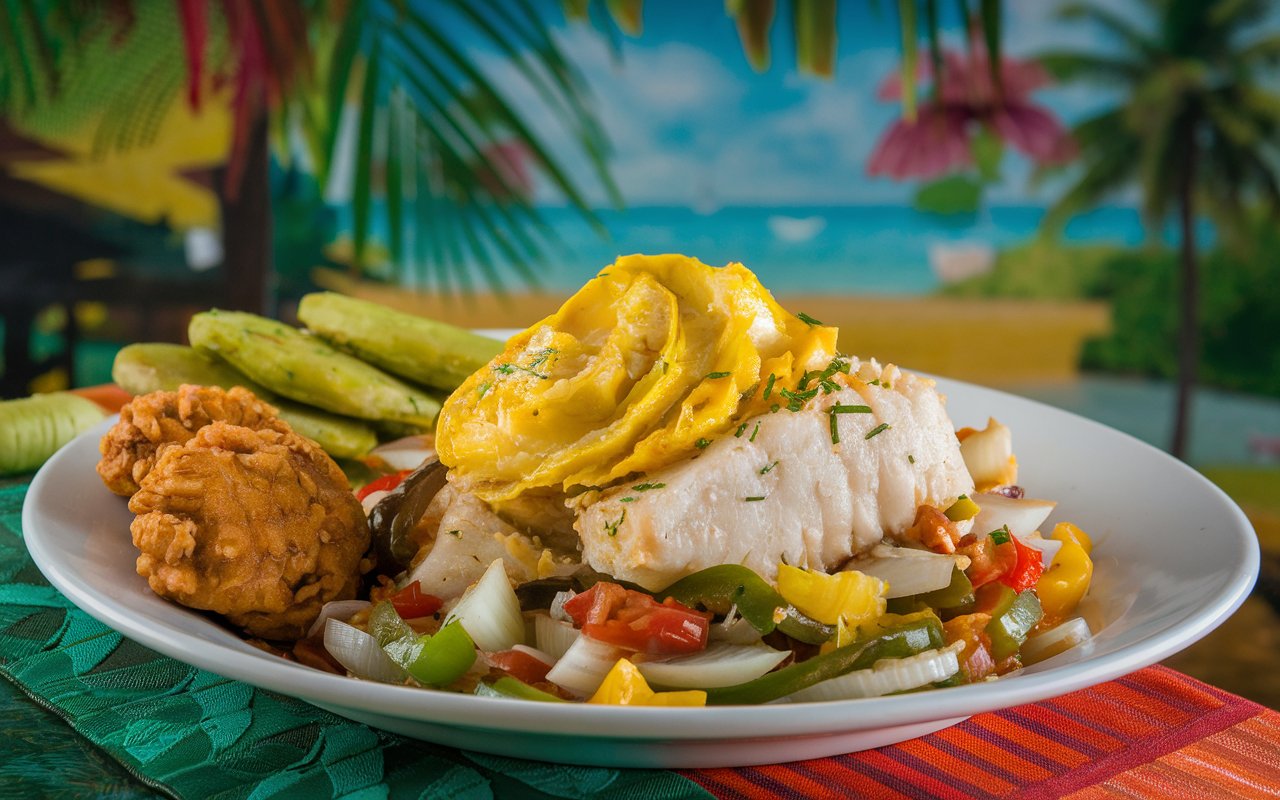
Jamaica is known for a vibrant, flavorful cuisine, and few dishes are as emblematic as Ackee & Saltfish—a savory breakfast staple (though it can appear at other meals) that merges salted cod with the unique, buttery fruit of the ackee tree. Imagine the mild creaminess of ackee (often compared to scrambled eggs in texture) offset by the salty intensity of flaked cod, sautéed with onions, peppers, and Scotch bonnet pepper for that hint of heat. The result is a visually enticing plate: ackee’s pale yellow hue dotted with bright peppers and flecks of salted fish, unveiling the heart of Jamaican home cooking.
My personal introduction to ackee and saltfish occurred at a Jamaican restaurant, where the dish was pitched as “like scrambled eggs, but not actually eggs.” Intrigued, I learned that ackee is a fruit that, once boiled, yields a soft, buttery mouthfeel surprisingly reminiscent of eggs. Paired with desalted cod and a quick sauté in aromatic herbs, it all made for a balanced sweet-salty-savory synergy. Over time, I discovered the importance of carefully preparing ackee—ensuring it’s fully ripe and properly boiled to remove toxins—and balancing the saltiness of the cod by soaking or boiling it to the right point. Now, Jamaican Ackee & Saltfish stands as a highlight whenever I want a breakfast that’s beyond typical eggs and bacon, or a taste of the Caribbean on my plate.
This recipe will guide you through cooking Ackee & Saltfish—from sourcing or preparing salted cod and ackee, to sautéing them with peppers, onions, and a whisper of Scotch bonnet heat. Whether you’re a Jamaican cuisine enthusiast or exploring it for the first time, brace for a dish that showcases the island’s vibrant flavors and comforting morning traditions.

Why Jamaican Ackee & Saltfish Delights
- Unique Fruit “Egg” Texture
Ackee’s soft, creamy consistency stands apart from most fruits. Its mild flavor soaks up the dish’s seasonings, bridging the gap between vegetable and protein illusions. - Balanced Salty-Fruity Savory
Salted cod (saltfish) brings briny depth. Ackee’s mild sweetness complements that intensity, especially when sautéed with onion, peppers, thyme, and a pinch of chili. - Culinary Heritage
Ackee is Jamaica’s national fruit, and ackee & saltfish is revered as a signature dish. Mastering it connects you to a central part of Jamaican gastronomic identity. - Breakfast, Brunch, or Any Meal
Traditionally a breakfast mainstay, but it can appear at any time. Often served with fried dumplings, festival, breadfruit, or rice—versatility abounds.
Ingredient Overview
Serves ~4:
| Ingredient | Quantity | Notes |
|---|---|---|
| Salted Cod (saltfish) | ~½–¾ lb | Adjust based on desired proportion of fish to ackee |
| Ackee (canned or fresh) | 2 cans (15 oz each), drained, or ~4 cups fresh ackee boiled | Fresh ackee requires proper prep due to toxins |
| Onion (chopped) | 1 medium | Key aromatic |
| Bell Pepper (chopped) | ~1 cup (mixed colors) | Jamaican versions often use sweet peppers |
| Scotch Bonnet Pepper (optional, seeded & minced) | ~½–1 pepper, to taste | Brings authentic heat, can sub with habanero or skip if you prefer mild |
| Garlic (minced) (optional) | 2 cloves (optional) | Some variants include it for extra flavor |
| Thyme (fresh or dried) | ~1 tsp (dried) or a few sprigs fresh | Adds signature herbal note |
| Tomato (chopped, optional) | 1 small | For color & slight tang, often in Jamaican style dishes |
| Oil (vegetable or coconut) | ~2–3 tbsp | For sautéing onion, peppers, and fish |
| Black Pepper | to taste | Basic seasoning, plus salt if needed (often not needed if fish is still salty) |
| Optional Sides (fried dumplings, boiled yam) | vary | Jamaican tradition is to serve with ground provisions or dumplings |
(Note: For fresh ackee, only use fully ripe, properly cleaned ackee, discarding seeds and protective membranes, then boil for ~10 minutes to remove toxins. Many prefer canned ackee for convenience and safety. For saltfish, confirm it’s cod or pollock. The main step is rehydration/desalting.)
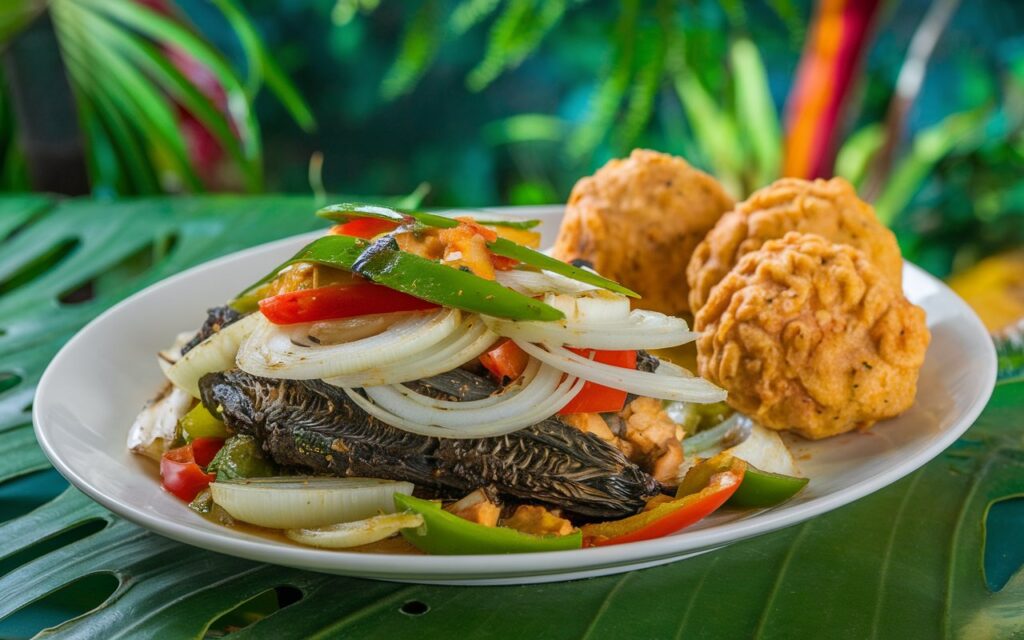
Step-by-Step Recipe (Approx. 35–45 Minutes)
- Desalt the Saltfish
- Rinse saltfish under cold water. Soak it in water for at least 2 hours, changing water a couple of times. Alternatively, boil it: place in a pot, cover with water, bring to a boil ~10 minutes, drain, and possibly repeat if still too salty. Once the salt content is to your liking, flake or chop into small pieces, discarding any skin or large bones.
- Prep Ackee
- If using fresh ackee, ensure it’s thoroughly cleaned and boiled ~10 minutes until tender. If using canned ackee, gently drain and rinse. Keep it aside, mindful that it’s delicate and can break easily.
- Sauté Aromatics
- Warm 2 tablespoons oil in a skillet over medium heat. Add chopped onion, bell peppers, and optional tomato. Sauté ~3–4 minutes until veggies soften. Incorporate minced garlic for the final minute if desired. Stir in scotch bonnet pepper or a portion of it for controlled heat—use gloves when handling.
- Cook Saltfish
- Mix the flaked saltfish into the sautéed veggies. Add thyme (dried or a few fresh sprigs). Let it cook ~3–4 minutes, stirring occasionally. If the fish is still fairly salty, you might not need extra salt. Taste a bit; if bland, add a small pinch of salt or black pepper.
- Add Ackee
- Gently fold in drained ackee, taking care not to mash the pieces too much. Reduce heat to low. Let them warm through ~2–3 minutes, stirring very gently. Ackee is delicate—over-stirring can turn it mushy.
- Final Taste & Adjust
- Sample. If it needs a bit more spice, toss in more scotch bonnet or black pepper. If you prefer a slightly sweeter note, some Jamaican recipes might add a small pinch of sugar or sweet peppers. Typically, the dish is balanced as is.
- Serve Hot
- Turn off heat. Serve ackee & saltfish with your choice of Jamaican sides: fried dumplings (“Johnny cakes”), boiled green bananas, fried plantains, or festival. A garnish of fresh tomato slices or scallions also brightens the presentation.
(Note: The dish should not taste overly salty if you’ve properly desalinated the fish. Keep in mind ackee’s mild, egg-like consistency—avoid prolonged cooking once ackee is added or it can disintegrate.)
Flavor Variations
- Coconut Oil
- Instead of vegetable oil, use coconut oil for a subtle tropical undertone that complements the Jamaican theme.
- Extra Veggie
- Some Jamaican cooks add shredded carrots or callaloo (Jamaican spinach) for more color and nutrients. Quick-sauté them with the onion and peppers.
- Tomato-Heavy
- Include more fresh tomatoes or a small spoonful of tomato paste to give the dish a slight stew-like aspect. This is less traditional but can be done to personal preference.
- Less Spicy
- Omit scotch bonnet or just place a piece in the pot without chopping it, letting a mild heat infuse without intense spiciness. Alternatively, use a mild chili.
Section 5: Serving & Storage
- Plate & Sides
- Typically, ackee & saltfish is served with Jamaican “provisions”—boiled dumplings, boiled green bananas, yams, or “festival” (a sweet fried dumpling). For a simpler approach, plain bread or rice also suits.
- Meal Times
- Commonly a breakfast or brunch dish in Jamaica, but it can easily appear at lunch or dinner. The hearty nature transcends typical Western meal designations.
- Leftovers
- Keep up to 2 days in the fridge. Reheat gently, mindful that the ackee can break down. The flavor remains, but the texture may soften further.
- Potluck
- If bringing to a potluck, keep it warm in a covered dish. Some might question the “eggy” appearance of ackee, so labeling can help. Jamaican guests or fans of Caribbean cuisine will likely be thrilled.
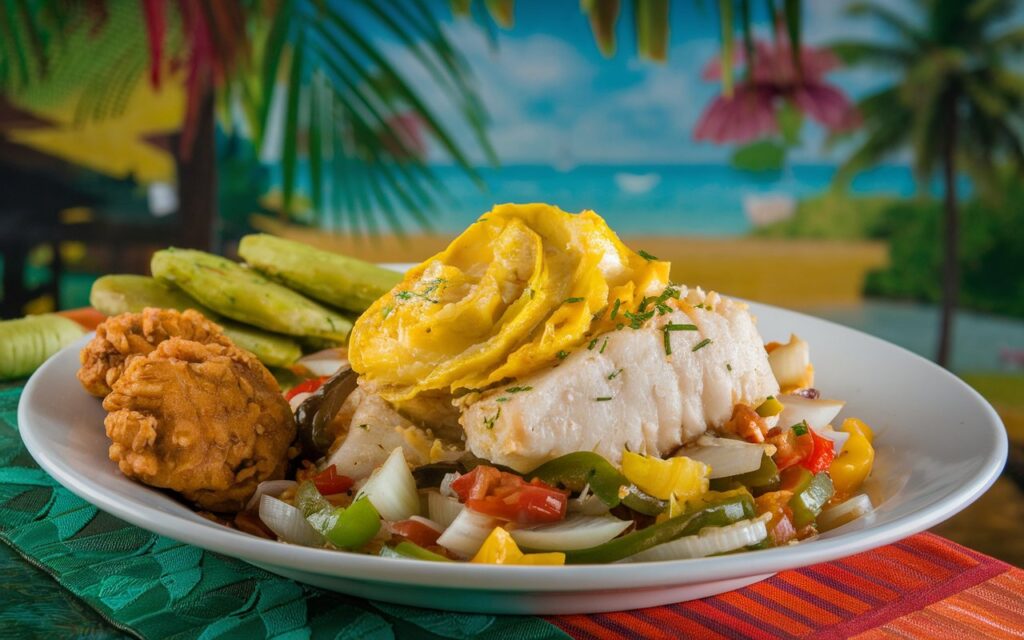
Key Tips & Potential Pitfalls
- Proper Saltfish Desalting
- Under-desalting leads to an overly salty dish, overshadowing ackee. Over-desalting can yield bland cod. Tasting a small flake after the initial boil helps gauge if you need a second boil or longer soak.
- Ackee Handling
- Canned ackee is partially cooked, so only warm it near the end. Stir gently to keep pieces intact. If fresh, confirm it’s fully ripe and boiled to remove toxins, as unripe ackee can be harmful.
- Scotch Bonnet Safety
- Scotch bonnet peppers are potent. Wear gloves or wash hands thoroughly after mincing, avoiding contact with eyes. Start with a small portion if unfamiliar with the heat.
- Don’t Overcook
- Ackee that’s overcooked becomes mushy, losing the chunk-like “egg” texture prized in the dish. Once warmed, remove from heat or keep on low.
FAQ – Jamaican Ackee & Saltfish
Q1: Can I use fresh cod if salted cod isn’t available?
A1: The signature flavor relies on salted cod, which provides a distinct briny depth. Fresh cod can be used, but you’d need to season it more. The dish won’t taste quite as traditional.
Q2: Is ackee dangerous if not handled properly?
A2: Fresh ackee must be fully ripe (the pod opening naturally) and properly cleaned/boiled to remove toxins. Canned ackee is already processed safely. Always follow guidelines for fresh ackee prep.
Q3: Could I incorporate other fish or seafood?
A3: Some variations might use salted pollock, but salted cod is standard. Using smoked fish or unsalted fish changes the profile drastically, losing that distinct Jamaican flavor.
Q4: Do I have to add peppers if I dislike spice?
A4: You can omit scotch bonnet entirely or only use a small slice for mild warmth. The dish remains flavorful thanks to onion, thyme, and the saltfish.
Q5: Does the dish need extra salt?
A5: Typically not, because saltfish provides salt. Taste after combining everything. If under-salted (rare), add a sprinkle of salt or fish sauce for umami.
Conclusion
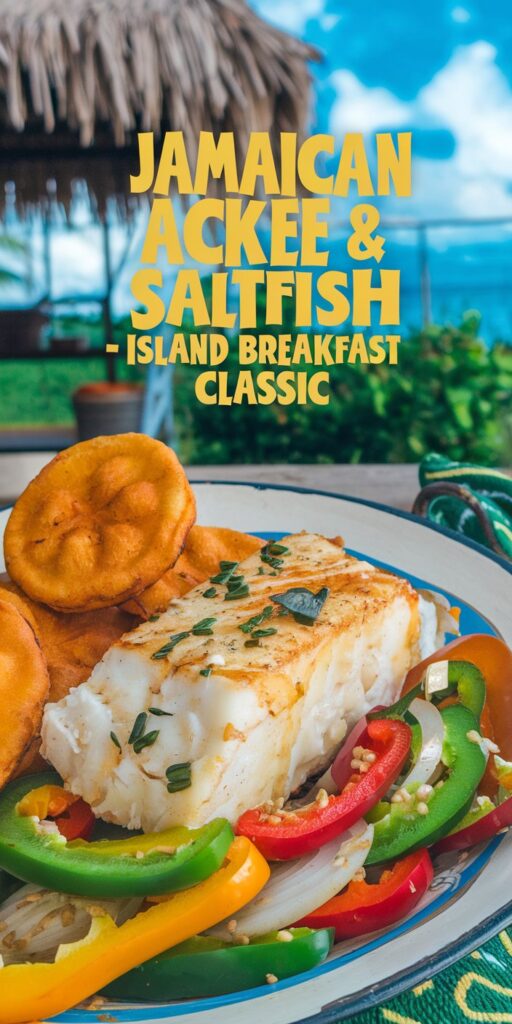
Capturing a cornerstone of Jamaican breakfast culture, Ackee & Saltfish unites the buttery, delicate fruit of the ackee with savory, salty cod—all brightened by peppers, onions, and a subtle note of thyme or chili. Each forkful features a creamy yet firm texture from the ackee, tangy-salty flakes of fish, and the gentle crunch of sweet peppers, culminating in a dish that stands proudly as the island’s national favorite. Ideal for a weekend brunch or a culinary exploration of Jamaican tradition, it’s an experience that merges sweet, savory, and faint heat in perfect harmony.
Now that you see how to properly soak or boil salted cod, incorporate ackee gently, and finalize it with fresh herbs or a pop of scotch bonnet, why not celebrate a Jamaican-style breakfast soon? After enjoying that final velvety mouthful—perhaps accompanied by fried dumplings or boiled green bananas—circle back to share how it turned out. Did you manage the fish’s salt level well, or experiment with extra vegetables in your sauté? Your personal flair might inspire other adventurous food lovers to bring a taste of Jamaican sunshine into their morning routines.