


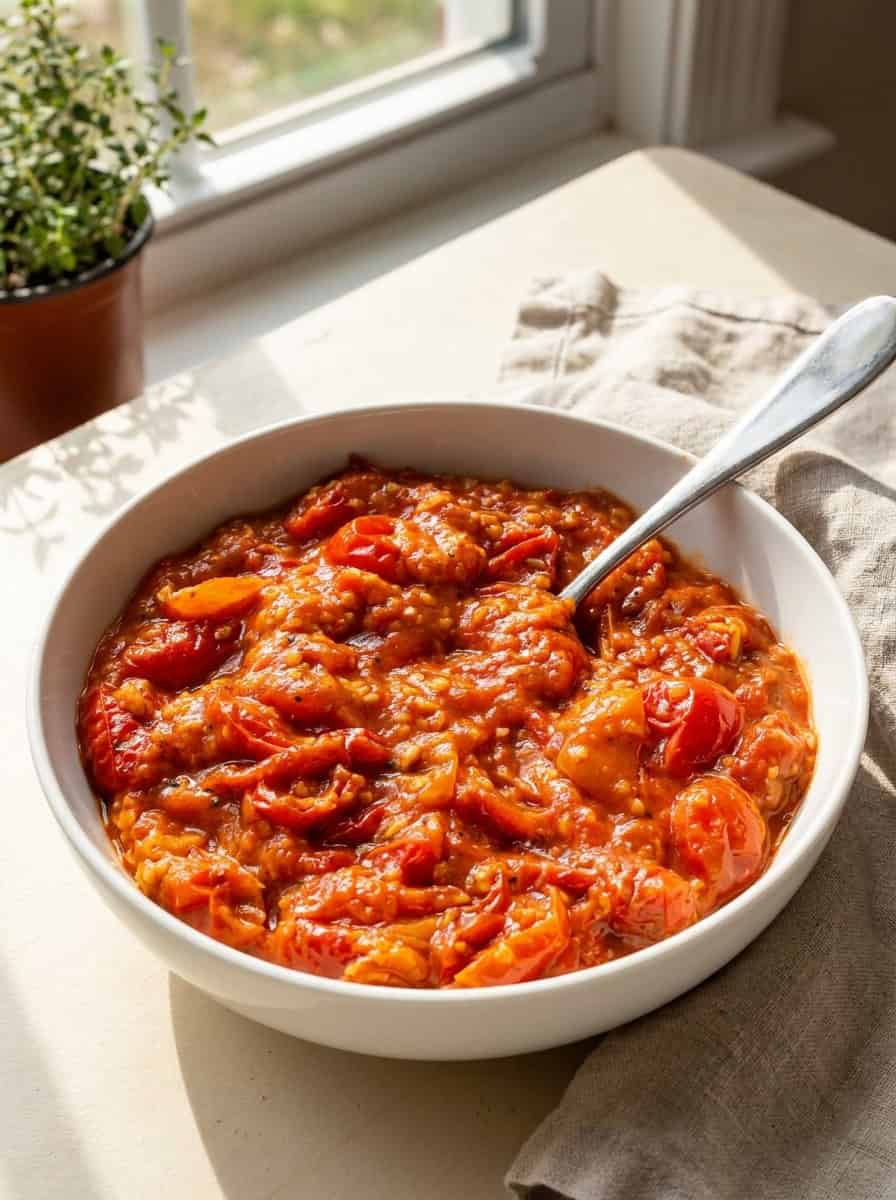
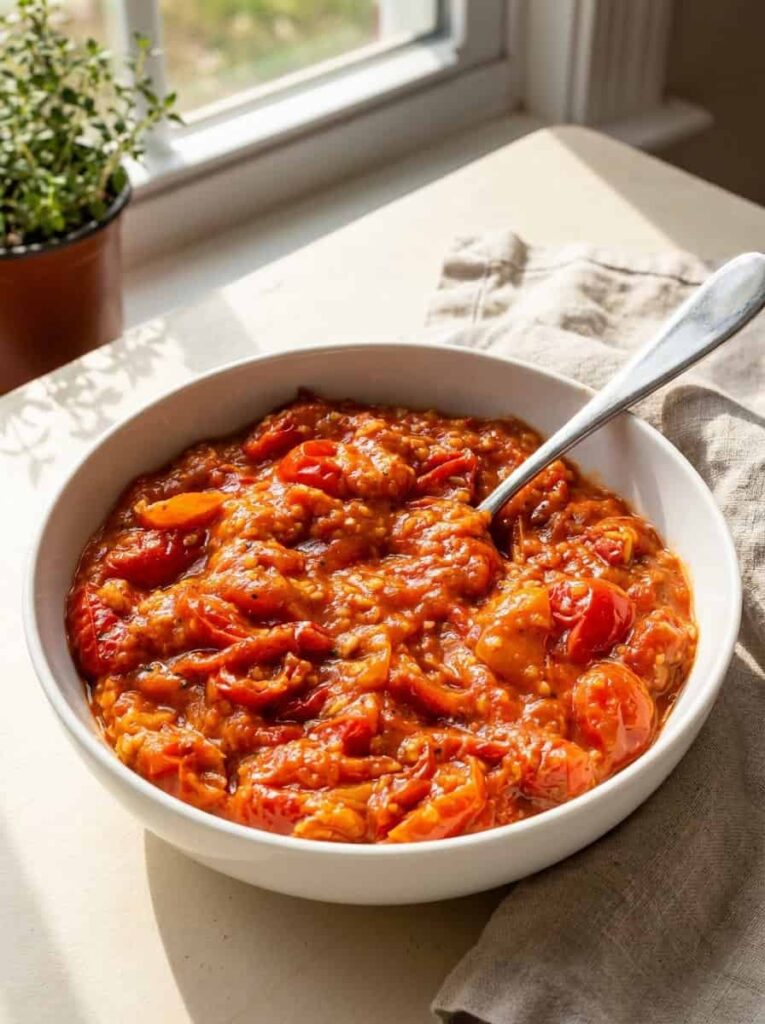
This is the sauce I make every time I have cherry tomatoes that need to be used. Two pints, three tablespoons of olive oil, four cloves of garlic, salt and pepper. That’s it. Twenty-five minutes.
The cherry tomato sauce is what happens when you let small tomatoes cook long enough over enough heat that they stop being individual fruit and become a unified, deeply savory sauce. The skins disappear. The seeds dissolve. What’s left is thick, slightly sweet, bright with tomato flavor in a way that jarred sauce never quite achieves — because cherry tomatoes have a sweetness and acidity that canning and processing flattens.
It goes on pasta, on pizza, on eggs, on toast. I’ve spooned it over roasted chicken and called it a pan sauce. Versatile is an understatement.
Five ingredients — why it works without anything else
Cherry tomatoes are a different ingredient than plum or beefsteak tomatoes. They have thinner skins, higher sugar content, and a more concentrated flavor — which means they break down faster, release more usable juice per pound, and produce a sauce with a natural sweetness that doesn’t need sugar added to balance acid.
The garlic goes in late. This is the one technique decision worth understanding before you start. If garlic goes into hot oil at the beginning with the raw tomatoes, it has 20 minutes to sit in hot fat and cook — long enough to go from golden and sweet to darker and bitter before the tomatoes have broken down enough to protect it. Adding it after the tomatoes have started releasing their juice means it goes into a wet, acidic environment that controls its cooking and lets it mellow into the sauce rather than browning against the pan.
The pressing step is the other thing. The back of a wooden spoon applied to a softening cherry tomato helps it release liquid faster and breaks the skin without fully mashing the flesh — you get more sauce, faster, without the texture becoming completely uniform. (I skip this some nights when I’m tired. The sauce still works. It just takes a few minutes longer.)
What goes in and what to know

Two pints of cherry tomatoes: halved. That’s about 24 ounces of whole tomatoes. Any color works — red is classic, but a mix of red, yellow, and orange gives a sauce that’s more complex and visually interesting. Grape tomatoes are a fine substitute; they’re slightly less sweet and have thicker flesh, so they take longer to break down.
Three tablespoons of olive oil: this seems like a lot for a sauce, but it’s the medium the tomatoes cook in and a real contributor to the finished flavor. A decent olive oil here is worth it. Not your best finishing oil — just one with actual olive flavor, not vegetable oil pretending.
Four garlic cloves, minced: this is a garlic-forward sauce. If four cloves sounds like too much, consider that they’re going into two pints of tomatoes and the final yield is only about a cup and a half. It’s proportional. If you’re genuinely not a garlic person, three cloves works.
Kosher salt: a full teaspoon, added with the garlic. Kosher salt dissolves differently than table salt — if you’re substituting, use about three-quarters of a teaspoon of fine sea salt instead.
Black pepper: half a teaspoon. Freshly cracked is better here than pre-ground — the sauce is simple enough that the coarser texture and brighter flavor of fresh pepper is noticeable.
Twenty-five minutes, one pan
Heat the olive oil in a large skillet over medium heat. Large is the right size here — two pints of halved tomatoes takes up a lot of surface area before they cook down, and a crowded pan traps steam and makes them stew rather than sauté. Wide is better than deep.
Add the halved tomatoes cut-side down if you can manage it — more caramelization that way — and stir them into the oil. They’ll spit and sizzle as the moisture hits the hot pan. Let them cook for 5 to 7 minutes, stirring every minute or so, until they start to look juicy and the pan has a visible layer of liquid. Now add the garlic, salt, and pepper. Stir to combine.
Turn the heat up to medium-high. From here, cook for 15 to 20 minutes, stirring frequently — especially toward the end when the sauce has reduced and is more likely to scorch on the bottom. Every few minutes, use the back of the spoon to press down on any tomatoes that are still whole and soft enough to flatten. They’ll release a burst of juice and break apart into the sauce.
The sauce is ready when it’s thick enough that dragging a spoon through it leaves a trail that takes a moment to close, and when most of the whole tomato pieces have disappeared into the sauce. It should look like a loose, rustic pasta sauce rather than a soup. Taste it now and adjust salt before you take it off the heat — the flavor is fully developed at this point and you’ll know exactly what it needs.
What to do with it
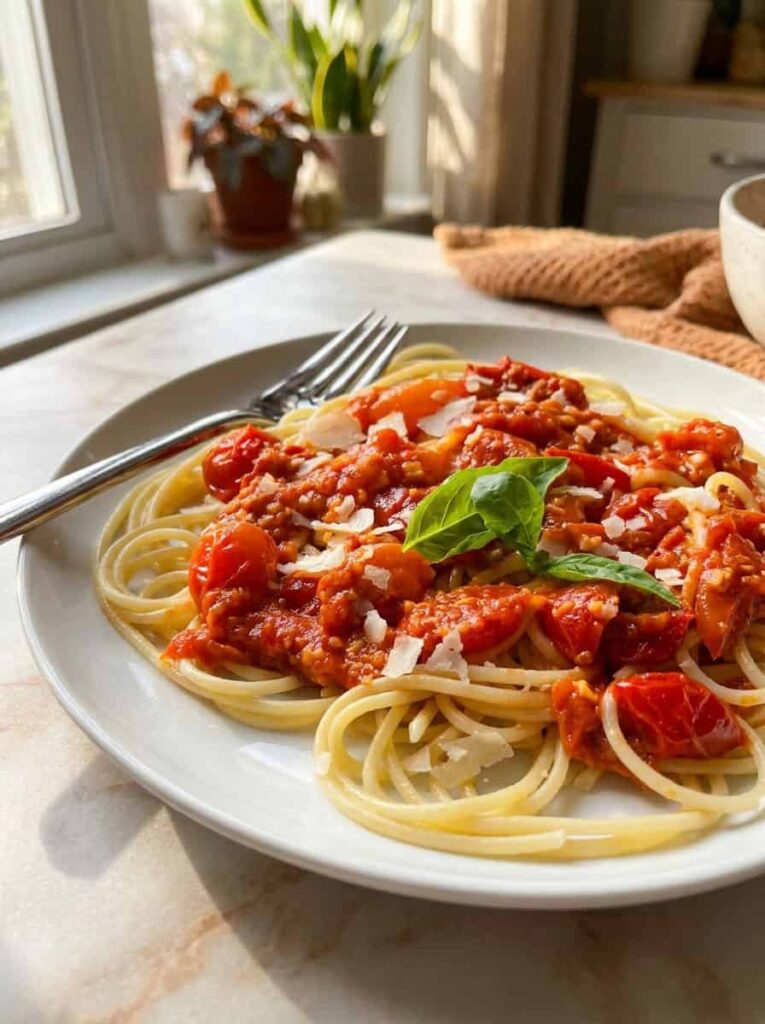
The obvious one: toss with pasta and a handful of fresh basil and parmesan. It coats long pasta well and is substantial enough for short pasta. Half a pound of pasta to this batch of sauce is the right ratio — any more pasta and the sauce gets thin.
On pizza: spread it over dough and use it in place of a jar sauce. It’s less sweet, more acidic, and doesn’t make the crust soggy the way sauces with added water sometimes do.
Spooned over fried or scrambled eggs, with toast on the side. This is what I make for a late Saturday breakfast when there’s leftover sauce in the fridge.
As a dip for bread — toasted slices of sourdough or a good baguette, with the sauce slightly warm in a small bowl. A few fresh basil leaves and some olive oil drizzled over. Better than it sounds.
Storage
Keeps refrigerated in an airtight container for up to 3 days. The flavor deepens as it sits — day two is honestly better than day one. Reheat gently in a small saucepan over low heat with a splash of water if it’s gotten too thick.
Freezes well for up to 1 month. Freeze in small portions — quarter-cup or half-cup — so you can thaw exactly what you need. Thaw at room temperature until it starts to soften, then warm on the stove over low heat. The texture is very slightly different after freezing, but the flavor is preserved.
Per serving
About 125 calories per serving (roughly one-third cup of sauce), 10g fat, 8g carbs, 2g protein. This is a sauce — the numbers are for the sauce itself, not whatever it’s on. Light, olive oil-based, and nothing you’d need to think twice about.
Make this when you have tomatoes
This is one of those recipes that earns a permanent spot in a rotation not because it’s impressive but because it’s reliably good and takes less than half an hour. Cherry tomatoes from the farmers market, a pan, and patience. The sauce does the rest.
Leave a comment if you make it — especially if you tried it on something other than pasta. Save it to Pinterest for your summer cooking board. Subscribe below for more sauces and basics worth knowing.
Print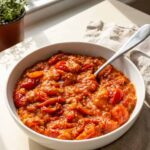
Cherry Tomato Sauce
A bright, deeply flavorful tomato sauce made with just five ingredients — cherry tomatoes cooked down in olive oil with garlic, salt, and pepper until thick and jammy. Ready in 25 minutes and better than anything from a jar.
- Total Time25 minutes
- Yield4 servings 1x
Ingredients
- 3 tbsp olive oil
- 2 pints cherry tomatoes, halved
- 4 garlic cloves, minced
- 1 tsp kosher salt
- 1/2 tsp black pepper
Instructions
- Heat the oil: Heat the olive oil in a large skillet over medium heat until it shimmers.
- Add the tomatoes and cook down: Add the halved cherry tomatoes and stir them into the oil. Cook for 5-7 minutes, stirring occasionally, until they begin to release their juices and the pan looks saucy. Then stir in the garlic, salt, and pepper.
- Increase heat and reduce: Raise the heat to medium-high. Continue cooking for 15-20 minutes, stirring frequently so the sauce doesn’t scorch on the bottom. Use the back of a wooden spoon to gently press the tomatoes as they soften — this helps them break down into sauce rather than staying as whole pieces.
- Finish and use: The sauce is ready when it has thickened and very few whole tomatoes are still visible. Taste and adjust salt. Use immediately over pasta, on pizza, with bread, or spooned over eggs. Makes about 1½ cups.
Notes
Garlic goes in after the tomatoes have started releasing their juices — not at the beginning. Raw garlic added to the pan with the tomatoes can brown and turn bitter before the tomatoes have cooked down enough. Use the back of a wooden spoon to press the tomatoes; this releases more liquid and speeds up the breakdown. The sauce keeps refrigerated for up to 3 days or frozen for 1 month.
- Prep Time: 5 minutes
- Cook Time: 20 minutes
- Category: Condiment, Sauce
- Cuisine: American, Italian
Nutrition
- Calories: 125
- Sugar: 5
- Sodium: 590
- Fat: 10
- Saturated Fat: 1.5
- Carbohydrates: 8
- Fiber: 2
- Protein: 2